
VHF FM vs VHF AM Radios: What’s the Difference and Where Are They Used?
Reliable communication is critical in marine, offshore, aviation, and industrial environments. Two of the most commonly used radio types are VHF FM radios and VHF AM radios. While both operate in the Very High Frequency (VHF) range, they serve very different purposes.
In this blog, we explain:
- What VHF FM and VHF AM radios are
- Key differences between them
- Where each type is commonly used
- How to choose the right one for your application
What Is VHF Radio?
VHF (Very High Frequency) radios operate between 30 MHz and 300 MHz. These frequencies provide:
- Clear line-of-sight communication
- Low interference
- Reliable short- to medium-range coverage
Because of these advantages, VHF radios are widely used in ships, offshore platforms, airports, oil & gas facilities, and emergency services.
What Is VHF FM Radio?
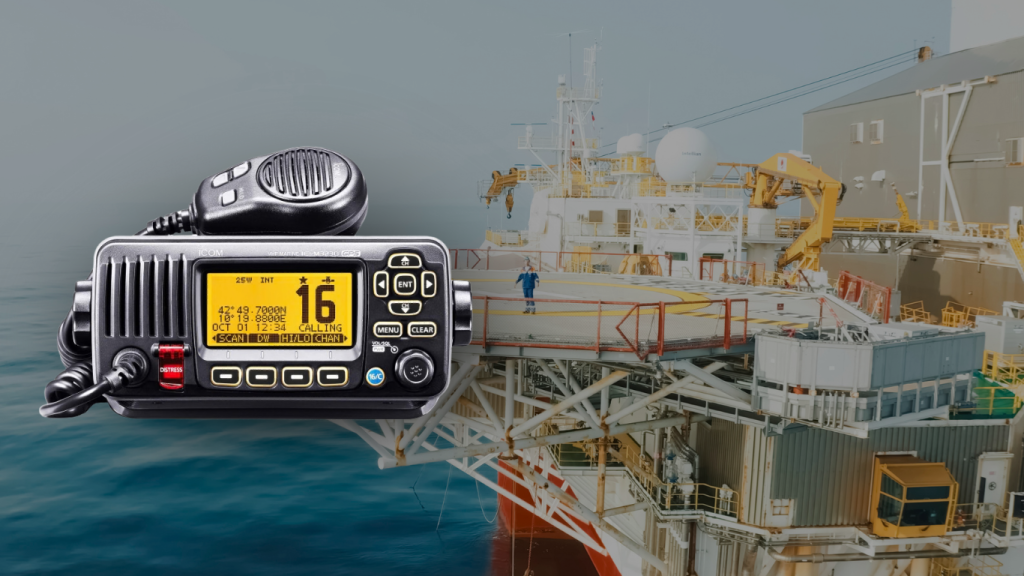
VHF FM (Frequency Modulation) radios transmit information by varying the frequency of the signal.
Key Features of VHF FM Radios
- Clear audio quality
- Better noise rejection
- Suitable for noisy environments
- Supports private and group communications
Common Uses of VHF FM Radios
VHF FM radios are commonly used in:
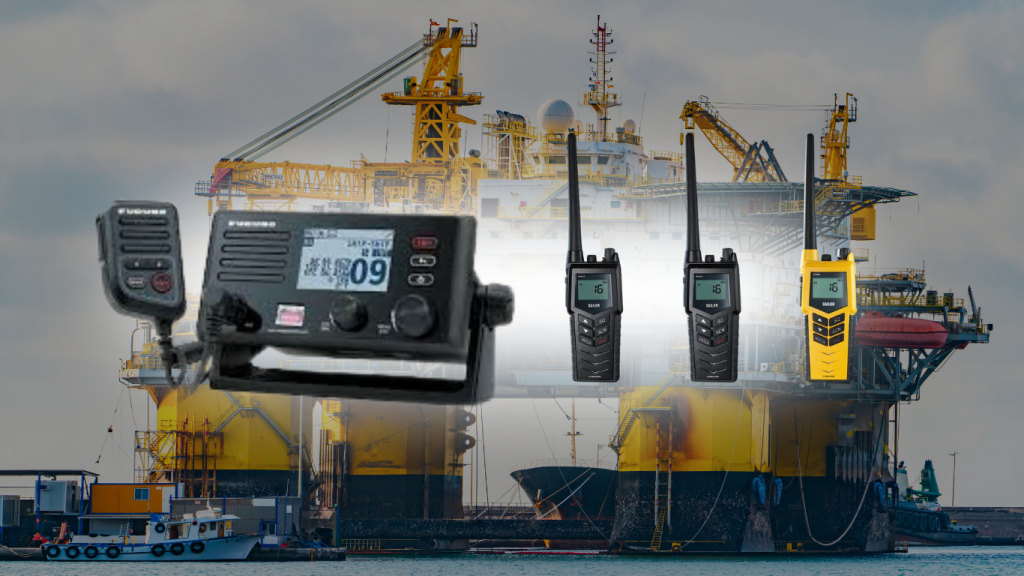
- Marine vessels (internal ship communication)
- Offshore platforms and FPSOs
- Oil & gas facilities
- Ports and shipyards
- Emergency services
- Industrial sites and utilities
These radios are ideal for crew communication, maintenance coordination, safety operations, and day-to-day operational use
What Is VHF AM Radio?
VHF AM (Amplitude Modulation) radios transmit information by varying the amplitude (signal strength).
Key Features of VHF AM Radios
- Simple and robust signal behavior
- Allows multiple transmissions to be heard simultaneously
- Standardised globally for aviation
Common Uses of VHF AM Radios
VHF AM radios are primarily used in:
- Aviation communication
- Aircraft-to-aircraft communication
- Aircraft-to-air traffic control (ATC)
In aviation, hearing overlapping transmissions is important for situational awareness and safety, which is why AM is still used despite being more sensitive to noise.
VHF FM vs VHF AM: Key Differences
Feature | VHF FM | VHF AM |
Modulation type | Frequency Modulation | Amplitude Modulation |
Audio quality | Clear and stable | More prone to noise |
Noise resistance | High | Low |
Typical environment | Marine, offshore, industrial | Aviation |
Multiple signals at once | Not ideal | Possible |
Primary purpose | Operational & safety comms | Air traffic communication |
Looking for reliable communication?
At Vivo Asia we support design, supply, installation, testing, and commissioning of reliable VHF radio systems for marine, offshore, and industrial environments.
Contact us to ensure your communication systems are reliable, compliant, and fit for harsh environments.
contact@vivoasia.com